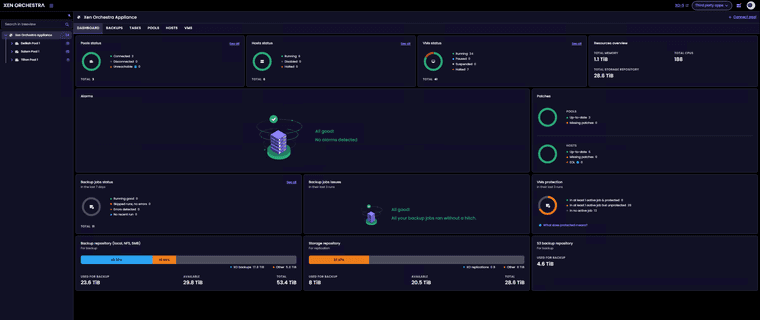
Finally just finished our migration from VMware to XCP-NG.
VMs - 34 mix windows server and ubuntu linux.
Pools - 3
Host - 6
Dell R660 - 2
Dell R640 - 4
 A
Offline
A
Offline
Finally just finished our migration from VMware to XCP-NG.
VMs - 34 mix windows server and ubuntu linux.
Pools - 3
Host - 6
Dell R660 - 2
Dell R640 - 4
Installed patches on home lab. No initial issues found. Existing Windows 11 vm no issues with it on basic vm functions. Created new Windows 11 vm with 26h2 iso no issues. Also installed guest tools in both vms.

Installed...
Updated:
  blktap.x86_64 0:3.55.5-9.4.xcpng8.3                forkexecd.x86_64 0:26.1.16-1.2.xcpng8.3
  message-switch.x86_64 0:26.1.16-1.2.xcpng8.3       qcow-stream-tool.x86_64 0:26.1.16-1.2.xcpng8.3
  rrdd-plugins.x86_64 0:26.1.16-1.2.xcpng8.3         sm.x86_64 0:3.2.12-23.5.xcpng8.3
  sm-cli.x86_64 0:26.1.16-1.2.xcpng8.3               sm-fairlock.x86_64 0:3.2.12-23.5.xcpng8.3
  squeezed.x86_64 0:26.1.16-1.2.xcpng8.3             varstored-guard.x86_64 0:26.1.16-1.2.xcpng8.3
  vhd-tool.x86_64 0:26.1.16-1.2.xcpng8.3             wsproxy.x86_64 0:26.1.16-1.2.xcpng8.3
  xapi-core.x86_64 0:26.1.16-1.2.xcpng8.3            xapi-nbd.x86_64 0:26.1.16-1.2.xcpng8.3
  xapi-rrd2csv.x86_64 0:26.1.16-1.2.xcpng8.3         xapi-storage-script.x86_64 0:26.1.16-1.2.xcpng8.3
  xapi-tests.x86_64 0:26.1.16-1.2.xcpng8.3           xapi-xe.x86_64 0:26.1.16-1.2.xcpng8.3
  xcp-networkd.x86_64 0:26.1.16-1.2.xcpng8.3         xcp-rrdd.x86_64 0:26.1.16-1.2.xcpng8.3
  xenopsd.x86_64 0:26.1.16-1.2.xcpng8.3              xenopsd-cli.x86_64 0:26.1.16-1.2.xcpng8.3
  xenopsd-xc.x86_64 0:26.1.16-1.2.xcpng8.3
We pushed the tested packages along a xen security update to the xcp-ng-updates repository, check blog post for summary and related advisories:
https://xcp-ng.org/blog/2026/07/28/july-2026-updates-1-for-xcp-ng-8-3-lts/
Just updated my homelab hosts.
[10:45 xcp-ng-disjqdnc ~]# yum clean metadata
Loaded plugins: fastestmirror
Cleaning repos: xcp-ng-base xcp-ng-updates
6 metadata files removed
4 sqlite files removed
0 metadata files removed
[10:45 xcp-ng-disjqdnc ~]# yum update
Loaded plugins: fastestmirror
Loading mirror speeds from cached hostfile
Excluding mirror: updates.xcp-ng.org
 * xcp-ng-base: mirrors.xcp-ng.org
Excluding mirror: updates.xcp-ng.org
 * xcp-ng-updates: mirrors.xcp-ng.org
xcp-ng-base/signature                                                                                                |  473 B  00:00:00
xcp-ng-base/signature                                                                                                | 3.0 kB  00:00:00 !!!
xcp-ng-updates/signature                                                                                             |  473 B  00:00:00
xcp-ng-updates/signature                                                                                             | 3.0 kB  00:00:00 !!!
(1/2): xcp-ng-base/primary_db                                                                                        | 3.9 MB  00:00:00
(2/2): xcp-ng-updates/primary_db                                                                                     | 1.6 MB  00:00:01
Resolving Dependencies
--> Running transaction check
---> Package xen-dom0-libs.x86_64 0:4.17.6-9.3.xcpng8.3 will be updated
---> Package xen-dom0-libs.x86_64 0:4.17.6-9.3.1.xcpng8.3 will be an update
---> Package xen-dom0-tools.x86_64 0:4.17.6-9.3.xcpng8.3 will be updated
---> Package xen-dom0-tools.x86_64 0:4.17.6-9.3.1.xcpng8.3 will be an update
---> Package xen-hypervisor.x86_64 0:4.17.6-9.3.xcpng8.3 will be updated
---> Package xen-hypervisor.x86_64 0:4.17.6-9.3.1.xcpng8.3 will be an update
---> Package xen-libs.x86_64 0:4.17.6-9.3.xcpng8.3 will be updated
---> Package xen-libs.x86_64 0:4.17.6-9.3.1.xcpng8.3 will be an update
---> Package xen-tools.x86_64 0:4.17.6-9.3.xcpng8.3 will be updated
---> Package xen-tools.x86_64 0:4.17.6-9.3.1.xcpng8.3 will be an update
--> Finished Dependency Resolution

Dependencies Resolved

============================================================================================================================================
 Package                          Arch                     Version                                   Repository                        Size
============================================================================================================================================
Updating:
 xen-dom0-libs                    x86_64                   4.17.6-9.3.1.xcpng8.3                     xcp-ng-updates                   704 k
 xen-dom0-tools                   x86_64                   4.17.6-9.3.1.xcpng8.3                     xcp-ng-updates                   2.0 M
 xen-hypervisor                   x86_64                   4.17.6-9.3.1.xcpng8.3                     xcp-ng-updates                   2.4 M
 xen-libs                         x86_64                   4.17.6-9.3.1.xcpng8.3                     xcp-ng-updates                    66 k
 xen-tools                        x86_64                   4.17.6-9.3.1.xcpng8.3                     xcp-ng-updates                    47 k

Transaction Summary
============================================================================================================================================
Upgrade  5 Packages

Total download size: 5.2 M
Is this ok [y/d/N]: y
Downloading packages:
Delta RPMs disabled because /usr/bin/applydeltarpm not installed.
(1/5): xen-dom0-tools-4.17.6-9.3.1.xcpng8.3.x86_64.rpm                                                               | 2.0 MB  00:00:00
(2/5): xen-dom0-libs-4.17.6-9.3.1.xcpng8.3.x86_64.rpm                                                                | 704 kB  00:00:00
(3/5): xen-libs-4.17.6-9.3.1.xcpng8.3.x86_64.rpm                                                                     |  66 kB  00:00:00
(4/5): xen-hypervisor-4.17.6-9.3.1.xcpng8.3.x86_64.rpm                                                               | 2.4 MB  00:00:00
(5/5): xen-tools-4.17.6-9.3.1.xcpng8.3.x86_64.rpm                                                                    |  47 kB  00:00:00
--------------------------------------------------------------------------------------------------------------------------------------------
Total                                                                                                       2.9 MB/s | 5.2 MB  00:00:01
Running transaction check
Running transaction test
Transaction test succeeded
Running transaction
  Updating   : xen-libs-4.17.6-9.3.1.xcpng8.3.x86_64                                                                                   1/10
  Updating   : xen-hypervisor-4.17.6-9.3.1.xcpng8.3.x86_64                                                                             2/10
  Updating   : xen-dom0-libs-4.17.6-9.3.1.xcpng8.3.x86_64                                                                              3/10
  Updating   : xen-tools-4.17.6-9.3.1.xcpng8.3.x86_64                                                                                  4/10
  Updating   : xen-dom0-tools-4.17.6-9.3.1.xcpng8.3.x86_64                                                                             5/10
  Cleanup    : xen-dom0-tools-4.17.6-9.3.xcpng8.3.x86_64                                                                               6/10
  Cleanup    : xen-tools-4.17.6-9.3.xcpng8.3.x86_64                                                                                    7/10
  Cleanup    : xen-dom0-libs-4.17.6-9.3.xcpng8.3.x86_64                                                                                8/10
  Cleanup    : xen-hypervisor-4.17.6-9.3.xcpng8.3.x86_64                                                                               9/10
  Cleanup    : xen-libs-4.17.6-9.3.xcpng8.3.x86_64                                                                                    10/10
  Verifying  : xen-dom0-tools-4.17.6-9.3.1.xcpng8.3.x86_64                                                                             1/10
  Verifying  : xen-dom0-libs-4.17.6-9.3.1.xcpng8.3.x86_64                                                                              2/10
  Verifying  : xen-hypervisor-4.17.6-9.3.1.xcpng8.3.x86_64                                                                             3/10
  Verifying  : xen-libs-4.17.6-9.3.1.xcpng8.3.x86_64                                                                                   4/10
  Verifying  : xen-tools-4.17.6-9.3.1.xcpng8.3.x86_64                                                                                  5/10
  Verifying  : xen-libs-4.17.6-9.3.xcpng8.3.x86_64                                                                                     6/10
  Verifying  : xen-dom0-tools-4.17.6-9.3.xcpng8.3.x86_64                                                                               7/10
  Verifying  : xen-hypervisor-4.17.6-9.3.xcpng8.3.x86_64                                                                               8/10
  Verifying  : xen-tools-4.17.6-9.3.xcpng8.3.x86_64                                                                                    9/10
  Verifying  : xen-dom0-libs-4.17.6-9.3.xcpng8.3.x86_64                                                                               10/10

Updated:
  xen-dom0-libs.x86_64 0:4.17.6-9.3.1.xcpng8.3 xen-dom0-tools.x86_64 0:4.17.6-9.3.1.xcpng8.3 xen-hypervisor.x86_64 0:4.17.6-9.3.1.xcpng8.3
  xen-libs.x86_64 0:4.17.6-9.3.1.xcpng8.3      xen-tools.x86_64 0:4.17.6-9.3.1.xcpng8.3
Updates applied...
Updated:
  forkexecd.x86_64 0:26.1.11-1.2.xcpng8.3                         kexec-tools.x86_64 1:2.0.15-21.1.xcpng8.3
  message-switch.x86_64 0:26.1.11-1.2.xcpng8.3                    qcow-stream-tool.x86_64 0:26.1.11-1.2.xcpng8.3
  rrdd-plugins.x86_64 0:26.1.11-1.2.xcpng8.3                      sm-cli.x86_64 0:26.1.11-1.2.xcpng8.3
  squeezed.x86_64 0:26.1.11-1.2.xcpng8.3                          varstored-guard.x86_64 0:26.1.11-1.2.xcpng8.3
  vhd-tool.x86_64 0:26.1.11-1.2.xcpng8.3                          wsproxy.x86_64 0:26.1.11-1.2.xcpng8.3
  xapi-core.x86_64 0:26.1.11-1.2.xcpng8.3                         xapi-nbd.x86_64 0:26.1.11-1.2.xcpng8.3
  xapi-rrd2csv.x86_64 0:26.1.11-1.2.xcpng8.3                      xapi-storage-script.x86_64 0:26.1.11-1.2.xcpng8.3
  xapi-tests.x86_64 0:26.1.11-1.2.xcpng8.3                        xapi-xe.x86_64 0:26.1.11-1.2.xcpng8.3
  xcp-networkd.x86_64 0:26.1.11-1.2.xcpng8.3                      xcp-rrdd.x86_64 0:26.1.11-1.2.xcpng8.3
  xenopsd.x86_64 0:26.1.11-1.2.xcpng8.3                           xenopsd-cli.x86_64 0:26.1.11-1.2.xcpng8.3
  xenopsd-xc.x86_64 0:26.1.11-1.2.xcpng8.3

Complete!
Will continue to test.
@rzr Installed latest update and no issues to report. I dont hvae any 2tb+ drives in my vms. converting from vhd to qcow2 and backups all working.
installed updates will report back.
Update - I had migrated vms back over to vhd prior to update release. I have migrated 2 vms back over to qcow2 and the initial backup ran successfull. Ran a second delta backup and that as well was successful with out issues. Backups happen very quickly now. But it appears the % and progress bar are working.
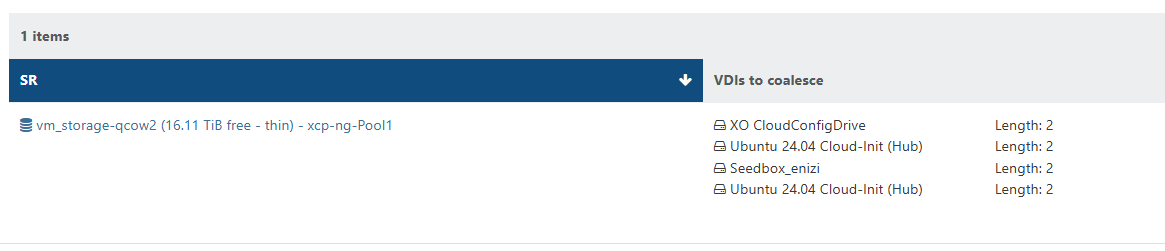
When CBT is enabled on the vm vdi. They show up as needing to be coalesced. VMs without CBT enabled the vdis are coalesced.
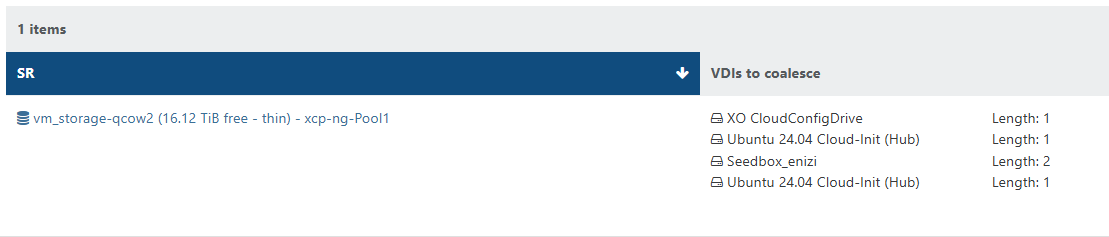
Will continue to monitor.
Once the coalesence hits 2 for the vm. The vm is skipped form future backups until cleared. (shutting down the vm will allow the coalescence to happen.
2026-04-23T19_52_34.694Z - backup NG.txt

@olivierlambert Created new topic.
Updated my to AMD Ryzen host in my home lab. No issues with update will monitor and report back any issues.
v0.6.0 — log collection is in. This was the piece the first post said was next, and it works end to end now.
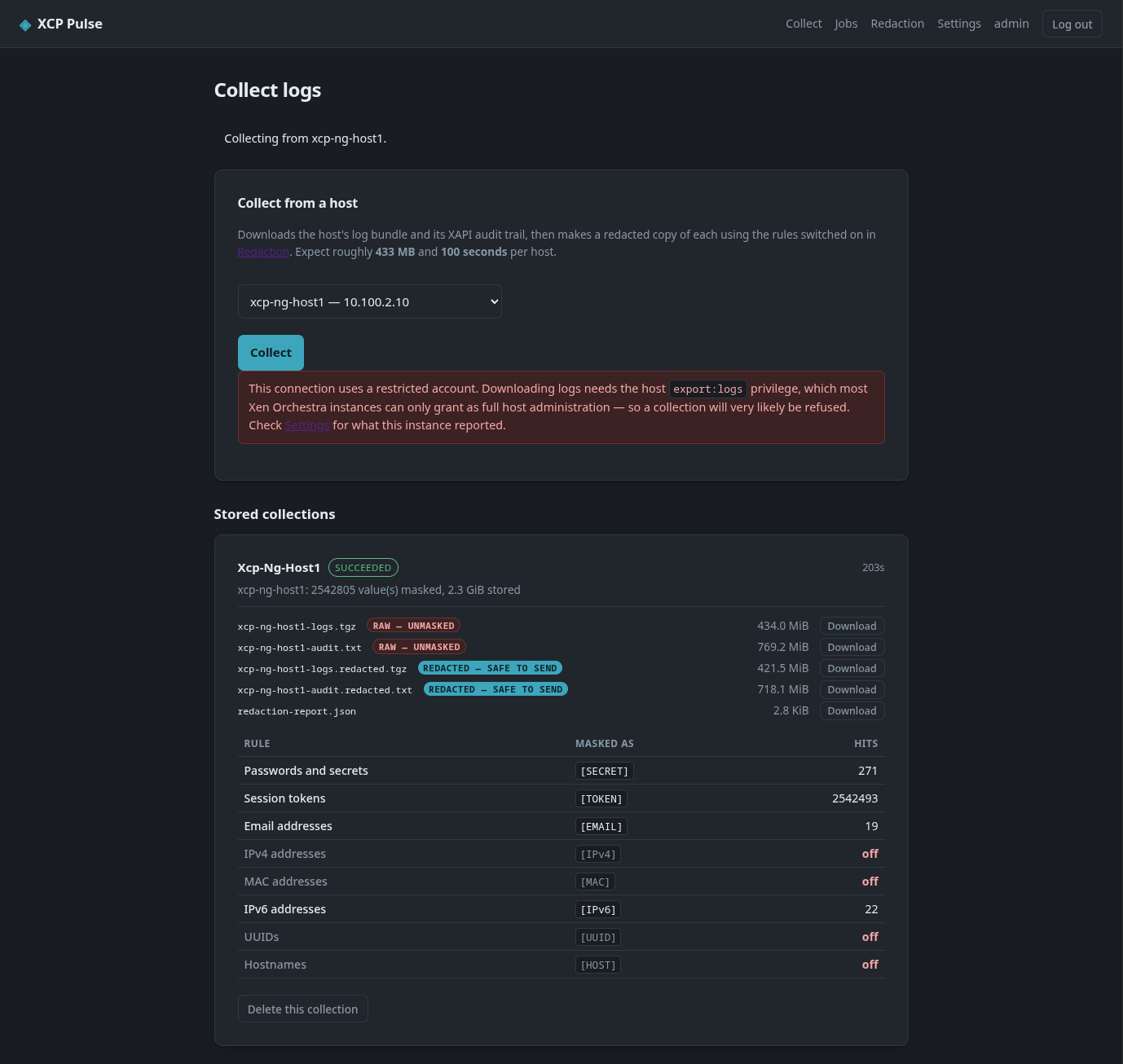
A new Collect page runs a per-host collection as a background job: it pulls logs.tgz and the XAPI audit trail from Xen Orchestra, keeps the raw copies, and produces a redacted copy of each. On my own XCP-ng 8.3 pool that came to 434 MiB for the bundle and 769 MiB for the audit trail, 2.3 GiB stored across the five files, with 2,542,805 values masked — almost all of them session tokens.
The download is streamed a megabyte at a time and never held in memory, and every chunk is a cancellation point, so Cancel actually stops a transfer rather than waiting it out. A failed or cancelled download deletes its partial file instead of leaving a half-written bundle sitting there looking like a collection.
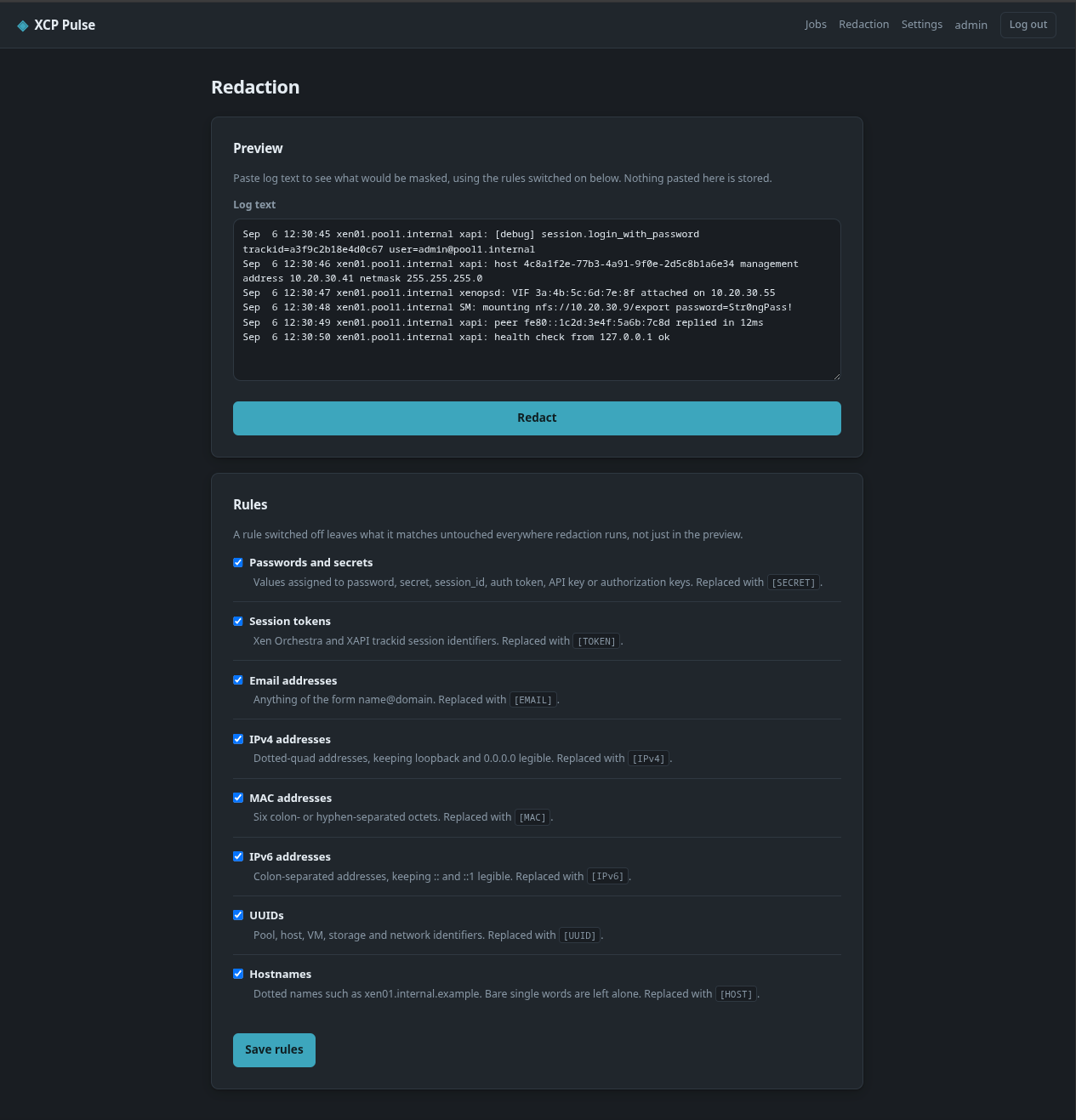
Both copies are kept and marked redacted — safe to send or raw — unmasked. Redaction is lossy, and the raw copy is the only thing that can answer "what did that used to say?" afterwards. Each collection writes the same redaction report the preview page produces, so you can see which rules fired — and which were switched off — before anything leaves the box. In the screenshot I had IPv4, MAC, UUIDs and hostnames turned off, and they show as off rather than as zero hits. That is deliberate: a partly-masked bundle should be obvious before you attach it to a ticket.
There is also a retention policy. The newest n collections are kept whatever their age, and only what is left is judged on age — a long gap in collecting can't empty the store. It shows you what a cleanup would delete and how much space that returns before you press the button.
Expect bugs. This is still very much a work in progress and it has only ever run against my own pool. If you try it in a different environment, assume things will break — please tell me what did. Known issues right now:
Two more things worth flagging if you try this.
logs.tgz sends no Content-Length, so a reverse proxy that buffers will happily hand you a truncated archive with HTTP 200. Mine did. It now detects that and reports the bundle as cut short rather than as a protocol error, and repacks whatever did arrive instead of throwing the lot away. If you are behind Nginx Proxy Manager, proxy_buffering off; and proxy_max_temp_file_size 0; are what fixed the stall for me.
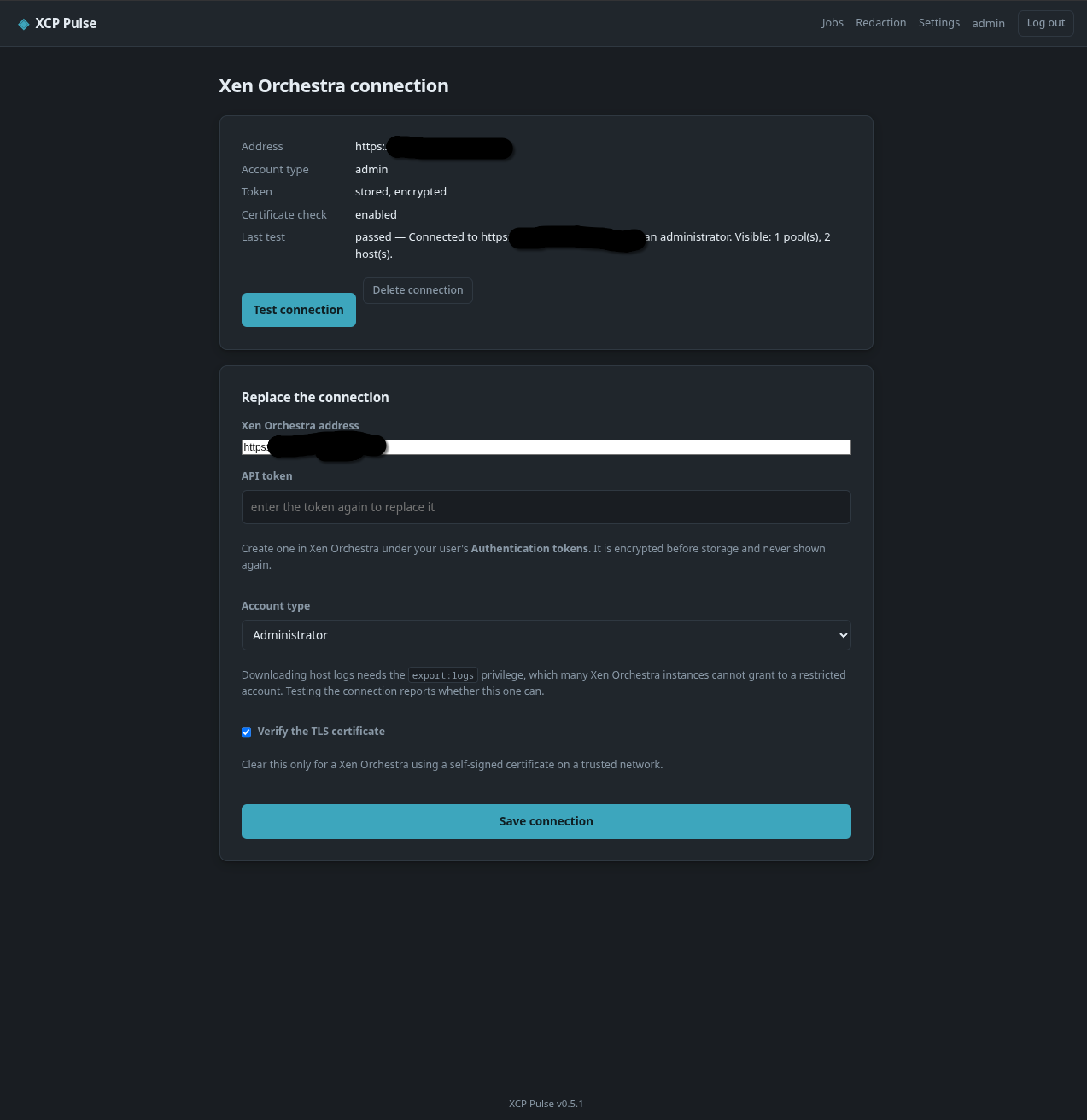
The account requirement from the first post has not changed — the log download needs export:logs on host, and on the instance I measured that is only reachable via Administrator. Inventory still works fine on Read only.
Next up: individual log categories pulled out of the cached bundle (~35 MB instead of 434 MiB), date ranges, and then findings.
https://github.com/acebmxer/xcp_pulse
While this project is more for myself it is open to others to use. Please use at your own risk. As always review the code before using in a production environment. Please leave any feedback or suggestions. https://github.com/acebmxer/xcp_pulse
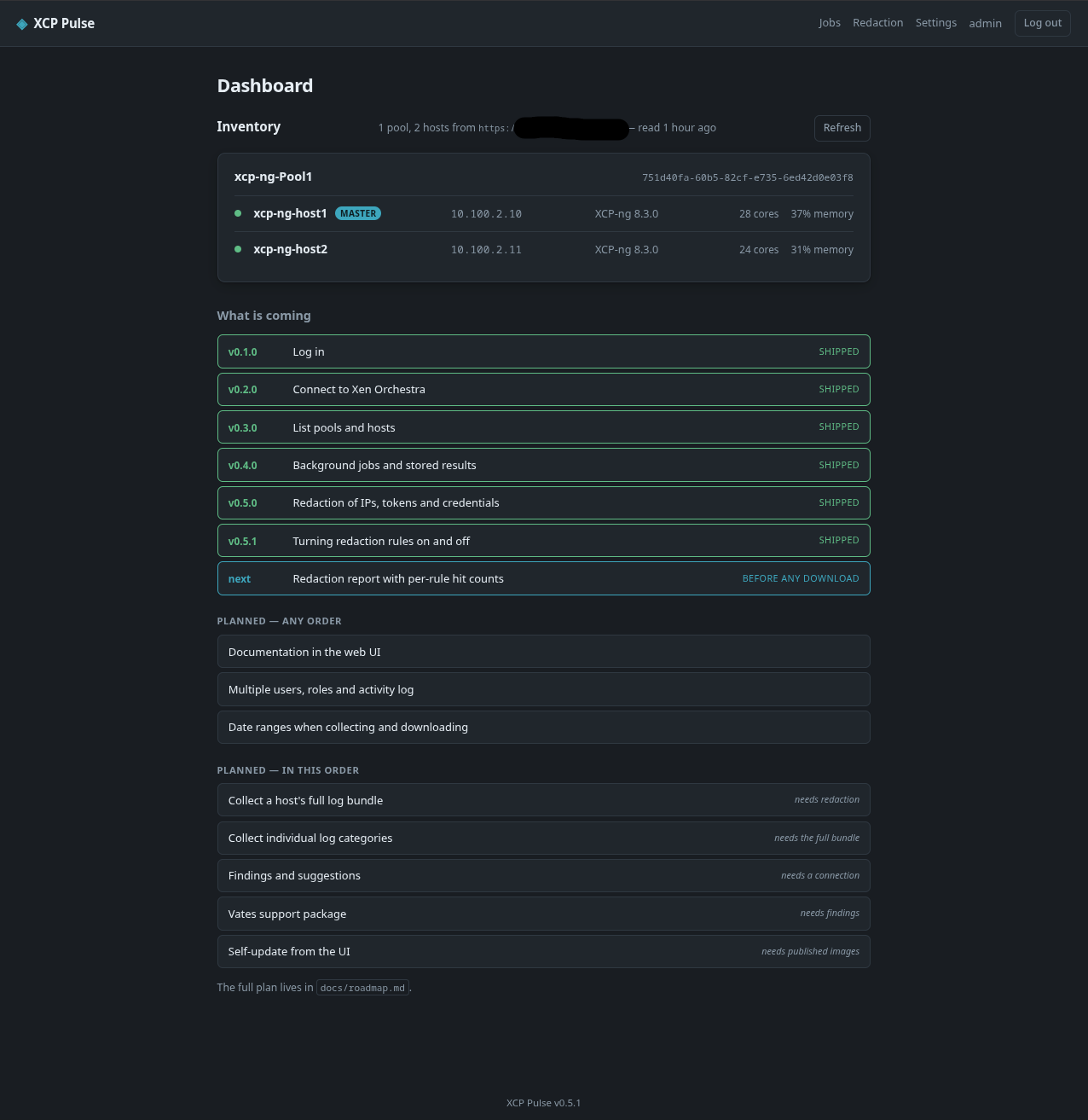
XCP Pulse collects XCP-ng and Xen Orchestra logs, bundles them for download, analyses them, and reports findings — for your own troubleshooting or to attach to a Vates support ticket. Everything goes through the Xen Orchestra REST API — nothing is installed on your hosts, and it only ever reads.
It runs as a container with a web UI. Being built in stages, and v0.5.1 is where it is today — so this is an early look rather than a finished tool. Log collection itself is the next big piece.
| Version | What it does |
|---|---|
| v0.1.0 | Container, login, sessions, healthcheck |
| v0.2.0 | Connect to Xen Orchestra — URL and API token, token encrypted at rest, "Test connection" |
| v0.3.0 | Pools and hosts listed on the dashboard, grouped by pool |
| v0.4.0 | Background jobs with live progress and history, and stored results |
| v0.5.0 | Redaction — masks addresses, tokens and credentials out of log text, with a preview page |
| v0.5.1 | Each redaction rule can be switched on or off |
Redaction came before any download button on purpose. A real log bundle is full of internal addresses, usernames and session tokens, and the point of the download is sending that file to Vates — shipping collection first would have meant a headline feature that leaks credentials. One real xensource.log I tested against had 8,359 lines matching password, secret or session patterns.
Full list with status: https://github.com/acebmxer/xcp_pulse/blob/main/docs/roadmap.md
No clone and no build — the image is published to GHCR, so the compose file and an env file are the whole deployment:
mkdir xcp-pulse && cd xcp-pulse
curl -o compose.yaml https://raw.githubusercontent.com/acebmxer/xcp_pulse/main/compose.yaml.example
curl -o xcp-pulse.env https://raw.githubusercontent.com/acebmxer/xcp_pulse/main/xcp-pulse.env.example
Generate the admin password hash — XCP Pulse stores a hash, never a password, and refuses to start without one:
docker compose run --rm xcp-pulse python -m app.hashpw
Paste the printed XCP_PULSE_ADMIN_PASSWORD_HASH=... line into xcp-pulse.env, then:
docker compose up -d
Open http://localhost:8080 and sign in with admin and the password you chose.
The env file has to be called xcp-pulse.env and not .env — compose treats a file of that name as its own variable source and mangles the Argon2 hash.
Inventory and API-based findings work fine with a Read only role. Downloading logs does not — /hosts/{id}/logs.tgz requires export:logs on host, and on the instance I measured (XO CE, @xen-orchestra/rest-api 0.39.0) that privilege was not in the grantable catalogue at all. The only role that could download logs was Administrator.
So for log collection you currently need an admin token. XCP Pulse reads the privilege catalogue from your instance and tells you what it can actually grant, rather than assuming — and asks which account type you gave it so it can name the missing privilege instead of showing a bare 403.
XCP Pulse holds a token that can read every log on your pool, and stores files containing session tokens and internal network topology. Run it on a trusted management network behind a reverse proxy — the compose file binds to 127.0.0.1 by default for that reason. Not exposed to the internet.
MIT licensed. This is an independent tool and is not affiliated with or endorsed by Vates.
Ok that was in xo from sources and yes issue is fixed...
Confirmed is working in XOA in 6.4.1
While this project is more for myself it is open to others to use. Please use at your own risk. As always review the script before using in a production environment. Please leave any feedback or suggestions. https://github.com/acebmxer/install_xen_orchestra/
https://forums.pozzatech.com - You can read more about this project and other things over in my personal forums.
Automated installation and management of Xen Orchestra from source.
Update 5/15/26 - This update only applies to anyone using older version of script. See note. Also added option to Adjust Xen Orchestra Memory Allocation. It will look at the system memory and suggest setting for XO based off the official documentation.
⚠️ Upgrading from an earlier version of this script? Read this first.
This version bumps the config schema to v2 (adds PUBLIC_URL and ENCRYPT_REDIS_CREDENTIALS) and corrects two config.toml generation bugs. Your xo-config.cfg is migrated automatically and non-destructively, but the corrected /etc/xo-server/config.toml is only written by --reconfigure.

Run --reconfigure once before resuming normal updates:

./install-xen-orchestra.sh --reconfigure
This regenerates config.toml with the fixes (your old file is backed up first; data in /var/lib/xo-server is untouched). It is strongly recommended if you set both REDIRECT_TO_HTTPS=true and REVERSE_PROXY_TRUST — that combination previously produced a duplicate [http] section and silently dropped one of the settings.

Afterwards, run --update as normal for routine XO updates — --update does not need to be preceded by --reconfigure again.
| Function | CLI Flag | Description |
|---|---|---|
| Install | --install |
Fresh install of Xen Orchestra |
| Update | --update |
Update existing installation (with backup) |
| Restore | --restore |
Restore from a previous backup |
| Rebuild | --rebuild |
Fresh clone + clean build, preserves settings |
| Reconfigure | --reconfigure |
Apply config changes without rebuilding |
| XO Proxy | --proxy |
Deploy XO Proxy to a Xen pool master |
| Edit Config | (menu only) | Open xo-config.cfg in your preferred editor |
| Rename Config | (menu only) | Rename sample-xo-config.cfg to xo-config.cfg |
Running without flags launches an interactive menu. All flags also work directly:
./install-xen-orchestra.sh           # interactive menu
./install-xen-orchestra.sh --update  # run update directly
./install-xen-orchestra.sh --help    # show all options
Running the script with no arguments opens a two-column menu with keyboard navigation:
  ╔══════════════════════════════════════════════════════════════════════════════════╗
  ║              Install Xen Orchestra from Sources Setup and Update                 ║
  ╚══════════════════════════════════════════════════════════════════════════════════╝

                        Current Script Commit : 693f4 (Branch: main)
                        Master Script Commit  : 693f4 (Branch: main)
                        Current XO Commit     : a1b2c (Branch: master)
                        Master XO Commit      : d4e5f (Branch: master)
                        Current Node          : v24.15.0

  ──────────────────────────────────────────────────────────────────────────────────

  ▸ [✓] Install Xen Orchestra                   [ ] Reconfigure Xen Orchestra
    [ ] Update Xen Orchestra                    [ ] Rebuild Xen Orchestra
    [ ] Rename Sample-xo-config.cfg             [ ] Edit xo-config.cfg
    [ ] Install XO Proxy                        [ ]  Restore Backup
                         [ ] Adjust Xen Orchestra Memory Allocation

  ──────────────────────────────────────────────────────────────────────────────────

  Selected: 1

  ↑↓←→ Navigate   SPACE Select/Deselect   ENTER Confirm   Q Quit
Select one or more items with SPACE, then press ENTER to run them.
git clone https://github.com/acebmxer/install_xen_orchestra.git
cd install_xen_orchestra
cp sample-xo-config.cfg xo-config.cfg
nano xo-config.cfg   # edit to your liking
./install-xen-orchestra.sh
Do NOT run with
sudo. Run as a normal user with sudo privileges — the script handlessudointernally.
If xo-config.cfg doesn't exist, it will be created automatically from the sample.
All settings live in xo-config.cfg. See sample-xo-config.cfg for full documentation of every option.
Key settings:
| Option | Default | Description |
|---|---|---|
HTTP_PORT |
80 | HTTP port |
HTTPS_PORT |
443 | HTTPS port |
INSTALL_DIR |
/opt/xen-orchestra | Installation directory |
GIT_BRANCH |
master | Git branch or tag |
NODE_VERSION |
24.15.0 | Node.js version |
SERVICE_USER |
xo-service | Service user (set to root for VMware V2V import) |
BACKUP_KEEP |
5 | Number of backups to retain |
BIND_ADDRESS |
0.0.0.0 | Bind address |
REVERSE_PROXY_TRUST |
false | Trust X-Forwarded headers from proxy IP |
Note on
BACKUP_KEEProtation: The retention policy only applies to backups created by the current version of the script. Backups made by older script versions may use a different naming convention and will not be counted or pruned by the rotation logic. If you are upgrading from an older version, manually review your backup directory (BACKUP_DIRin config, default/var/lib/xo-backups) and remove any legacy-named archives you no longer need.
After installation, access the web interface at https://your-server-ip.
admin@admin.netadminChange the default password immediately after first login.
Before applying an update, the script queries the Xen Orchestra REST API for active tasks (e.g. running backups, VM exports). If any are found, the update is aborted to prevent data loss or corruption.
Only admin-level XO accounts can access the REST API. Authentication is resolved in priority order:
| Priority | Method | Source |
|---|---|---|
| 1 | Auth token | XO_TASK_CHECK_TOKEN in xo-config.cfg |
| 2 | Credentials | XO_TASK_CHECK_USER / XO_TASK_CHECK_PASS in xo-config.cfg |
| 3 | Interactive | Prompted at runtime (press Enter to skip) |
It is recommended to create a dedicated XO web UI account solely for the task check (e.g. task-checker@local.net). This account:
You are free to use any admin account you choose, but a dedicated account is the safest approach.
Tokens are more secure than storing a password — they can be revoked independently and expire after 30 days by default.
curl -X POST -u 'task-checker@local.net:yourpassword' \
  https://localhost/rest/v0/users/me/authentication_tokens -k
id field from the responsexo-config.cfg:XO_TASK_CHECK_TOKEN=UlTBEnFeL12XocK-7Qx-DKvOYbPn0eG7Z2oMvOniNjg
Alternatively, store the account credentials directly:
XO_TASK_CHECK_USER=task-checker@local.net
XO_TASK_CHECK_PASS=changeme
If neither token nor credentials are configured, the script will prompt interactively during each update.
| Variable | Description |
|---|---|
XO_DEBUG=1 |
Enable debug mode (set -x) |
XO_NO_SELF_UPDATE=1 |
Skip automatic script self-update |
Check service logs:
sudo journalctl -u xo-server -n 50
If the build is broken, rebuild (takes a backup first):
./install-xen-orchestra.sh --rebuild
The Yarn build is memory-intensive. On hosts with less than 2 GB RAM the Node.js process can be killed by the kernel OOM killer mid-build, leaving an incomplete install.
Add or increase swap to give the build room:
sudo fallocate -l 2G /swapfile
sudo chmod 600 /swapfile
sudo mkswap /swapfile
sudo swapon /swapfile
Re-run the install or --rebuild after the swap is active. To make it permanent across reboots, add /swapfile none swap sw 0 0 to /etc/fstab.
On hosts without internet access (or with strict egress firewall rules) the NodeSource repository setup script fails because it cannot reach keyserver.ubuntu.com or deb.nodesource.com.
Option A — pre-download and import the key manually, then copy the .deb/.rpm packages to the host.
Option B — set NODE_VERSION to a specific patch version (e.g. 24.15.0) in xo-config.cfg. The script will then download a pre-built binary directly from nodejs.org instead of using the NodeSource package repository.
git reports "dubious ownership" and exitsRecent versions of Git refuse to operate on a repository owned by a different user than the one running the command. This can happen when sudo is used inconsistently or when the install directory was created by root but the script is run as a normal user.
Fix it by resetting ownership to match your SERVICE_USER:
sudo chown -R xo-service:xo-service /opt/xen-orchestra
Replace xo-service with the value of SERVICE_USER in xo-config.cfg. Re-running the script afterwards will resolve the rest.
On SELinux-enforcing systems the xo-server service may fail to bind ports or access network resources. Check for AVC denials:
sudo ausearch -m avc -ts recent | grep xo-server
If denials are present, generate and apply a local policy module:
sudo ausearch -m avc -ts recent | audit2allow -M xo-server-local
sudo semodule -i xo-server-local.pp
Alternatively, set the service to permissive mode while investigating:
sudo semanage permissive -a xo_server_t
audit2allow and semanage are provided by the policycoreutils-python-utils package on RHEL/Rocky/Alma.
This project is licensed under the MIT License. Xen Orchestra itself is licensed under AGPL-3.0.
Found root cause.... Forehead slap moment. NBD was not enable on the nics in the pool.
[info] Updating Xen Orchestra from 'cb85e44ae' to 'eed3d72f7'
First log is from automatic schedule before latest update.
2026-02-17T18_00_00.012Z - backup NG.txt
latest log after update. Backup completed successfully.
2026-02-17T18_22_52.199Z - backup NG.txt
If i recall from my migration I belive thats all there is to it. I know the docs mention about doing a test migration but mine just migrated and it just worked as you stated after making the needed adjustments.
Let other chime in but i think you are good to go. And you could delete the snapshot from the vm.
Updated AMD Ryzen pool at home and update two Intel Dell r660 and r640 pools at work. No issues to report back.
Thanks for the reply back. Update when sucessfull. Windows Server 2025 iso now properly installs.
At work I was not able to install default certs for UEFI due to one failing to download. Run these updates and I was able to successfully install the certs to the host.
Just installed updates on host 1. Once host rebooted it took an extra min or two to reconnect to xo, but did finally connect. Applying updates on host 2 now.
Update - host2 no issues. Once reboot complete it connected to xo as expected without delay.
I see these updates include -
xen: Add support for xenpm get-core-temp to query CPU temperature on Intel platforms.
Use xenpm get-core-temp to get the temperature on Intel's CPU, to fallback unsupported coretemp. Doc update being reviewed .
My host are AMD so can verify these. I might be able to deploy a Intel host later tonight. Will this come to AMD later?